The Voice That Crossed the Sea: Charlotte Maxeke and the Long Road Home
Before she was the Mother of Black Freedom in South Africa, she was a girl with a voice that filled concert halls in London. This is how a singer became a scholar, then a force the colonial state could not ignore.
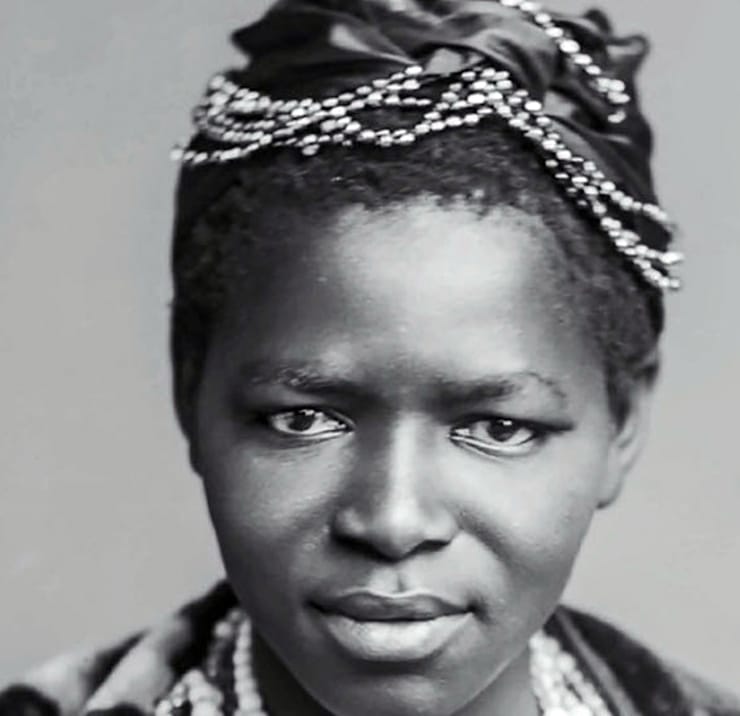
Imagine standing in the Royal Albert Hall in 1897. The room is full. Queen Victoria’s Diamond Jubilee is underway. Somewhere in that crowd of velvet and medals, a choir from Africa is singing. Among them is a young woman from the Eastern Cape whose voice people already call angelic. She is not yet famous for degrees or protests. She is known for sound.
That girl was Charlotte Maxeke. And the story that follows is not a straight line from applause to applause. It is a story about what happens when the tour ends, the money runs out, and the only way forward is to become something nobody back home had yet seen.
When the music stopped
Charlotte Makgomo Mannya was born in the early 1870s and grew up between mission schools and the restless energy of Kimberley after the diamond rush. She could teach, translate, and sing. In 1891 she joined the African Jubilee Choir. The group crossed Europe and North America, performing in cities that had never heard voices like theirs. For some audiences, the singers were artists. For others, they were curiosities. Charlotte felt the difference.
Then the tour collapsed. In Cleveland, the choir was abandoned. The glamour of the stage gave way to uncertainty and debt. It would have been easy for her story to end there, another footnote in the long history of Black performers exploited and discarded abroad.
It did not end there. Bishop Daniel A. Payne of the African Methodist Episcopal Church helped the stranded singers stay in the United States. Charlotte did not get the place she first wanted at Howard University, but she received a scholarship to Wilberforce University in Ohio, a historically Black institution where she would study under figures including W. E. B. Du Bois. In 1903 she graduated with a B.Sc. She became the first Black South African woman to earn a university degree, and the first African woman known to have graduated from an American university.
She had crossed the sea as a singer. She returned to South Africa as proof that an African woman could claim a credential the colonial world insisted was not for her.
What she did with the degree
A certificate is not a revolution. Charlotte knew that. She married Marshall Maxeke, helped bring the AME Church deeper into South African life, taught, preached, and wrote. She became involved in the early gatherings that would grow into the African National Congress. She watched pass laws tighten around Black lives and saw how those laws fell hardest on women trying to feed families and move through cities without humiliation.
In 1918 she founded the Bantu Women’s League, a grassroots body that carried complaints from poor and rural women straight into the political arena. She did not ask for permission to speak about women’s conditions. She built the structure that made ignoring them harder.
When women organised against passes in Bloemfontein, she was part of that story too. She stood with hundreds of women who marched on the city council and burned their passes, a public refusal of a system that wanted Black women to carry proof of their own subjugation. The image is almost impossible to hold quietly in your mind. Women who were told to carry papers that marked them as subjects decided, together, that the papers could burn.
She testified before government commissions on African education. For a Black woman in that era, that was not routine. It was a crack in the wall of who was allowed to be an expert on anything.
Why her voice still matters
Charlotte Maxeke died in Johannesburg in 1939. South Africa would still pass through decades of formal apartheid after her death. But the seeds she planted did not vanish. The Bantu Women’s League fed into what became the ANC Women’s League. Streets, hospitals, and memorial lectures still carry her name. People call her the Mother of Black Freedom in South Africa because she modelled something deeper than a single protest. She showed that education, faith, and organised women’s power could be woven into one life.
Her early fame came from song. Her lasting fame came from refusal. Refusal to accept that a Black girl’s future stopped at the edge of what missionaries or miners thought she deserved. Refusal to treat pass laws as natural. Refusal to let the women at the bottom of the pile speak only through men.
What to take away
- Charlotte Maxeke moved from international performance to academic study in the United States, graduating from Wilberforce University in 1903 as a pioneer for African women in higher education.
- She returned to South Africa and combined religious leadership, social work, and political organising, including early ANC-related activity and resistance to pass laws.
- In 1918 she founded the Bantu Women’s League, channelling rural and poor women’s grievances into organised pressure on authorities.
- She represents a bridge between transatlantic Black intellectual networks and local struggle, and between women’s everyday hardship and national politics.
The girl who sang for royalty became the woman who helped other women find their voice in the street and in the record books. The tour ended in Cleveland. The journey home never really stopped.